
Commercial EPCs from £190 · Clear size-based pricing across London

Commercial EPC in London

Commercial EPC Certificate in London

Arrange a clear, professionally scoped Energy Performance Certificate for a shop, office, warehouse or other non-domestic property. Start with the building address, use and total floor area to get an instant price or a tailored quotation.

Commercial EPC prices start from £190.

Qualified professionalClear scope before bookingSecure digital report
Commercial EPC professional property assessment
From£190

Clear size-based pricing

Commercial EPC cost

Our current commercial EPC price bands are based on the approximate total floor area across all floors:

Floor area is an important starting point, but complex buildings may require additional scoping. The quote should confirm VAT status and any parking, congestion, travel or unusual-access charges before booking.

Check the price for your building
Approximate total floor areaGuide price
Up to 50 m²£190
51 to 100 m²£250
101 to 150 m²£299
151 to 250 m²£350
251 to 300 m²£399
301 to 400 m²£450
401 to 500 m²£499
Over 500 m²Call for a quote
Across all floors. Larger or complex buildings require confirmed scoping.
Essential guidance

What is a commercial Energy Performance Certificate?

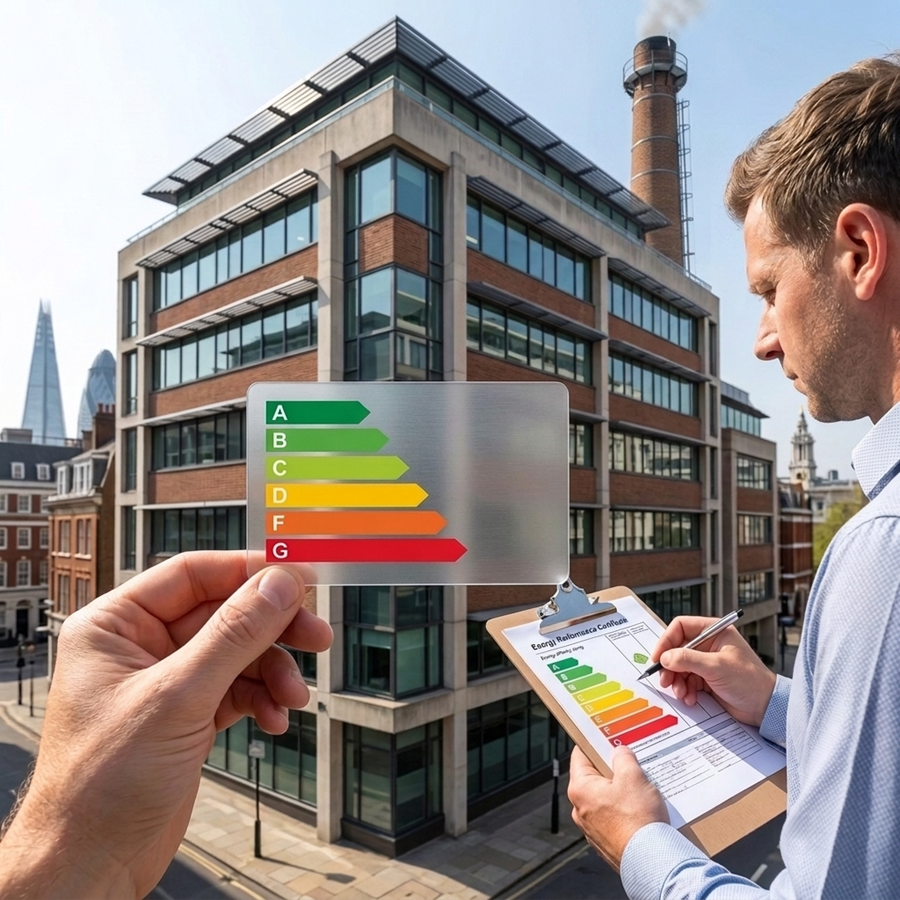
A commercial EPC, also called a non-domestic EPC, rates the energy performance of a building from A, the most efficient, to G, the least efficient. The calculation considers the building fabric, how spaces are used and the fixed systems that provide heating, cooling, ventilation, hot water and lighting.

A commercial EPC is commonly required when a qualifying non-domestic building is constructed, sold or rented. It is generally valid for 10 years, unless a newer certificate is produced. The certificate must be prepared by an appropriately accredited non-domestic energy assessor and lodged on the official register.

Property and service details

EPC certificate for shops, offices and warehouses

EPC certificate for a shop

Retail units can include sales areas, stores, staff rooms, display lighting, heating or cooling systems and sometimes shared landlord services. Tell us whether the instruction covers the whole building or a self-contained unit and whether the unit is occupied, vacant or being fitted out.

EPC certificate for an office

Office assessments consider the layout, activity areas, lighting, HVAC systems and controls. Plans, air-conditioning details and access to plant or landlord-controlled areas can help the assessor model the building accurately.

EPC certificate for a warehouse

Warehouses and industrial-style units vary widely. A simple unheated storage unit is different from a heated warehouse with offices, workshops, mezzanines or process areas. Give us the building use and a breakdown of the main spaces when asking for a quote.

EPC certificate for other commercial property

We welcome enquiries for restaurants, cafes, surgeries, salons, studios, community premises and mixed-use buildings. If you need an EPC certificate for commercial property with several uses or tenancies, explain which building or unit is being sold or let. Some buildings may need a specialist assessor or a different form of energy documentation, so accurate scoping comes first.

What to check

What does a commercial EPC assessor need?

The more reliable the starting information, the easier it is to price the assessment and avoid delays. Where available, share:

Do not delay an enquiry because some documents are missing. Tell us what you have and we will identify the information the assessor still needs.

  • Full property address and the part of the building to be assessed
  • Current or intended use of each main area
  • Approximate total floor area and number of floors
  • Floor plans, lease plans or measured drawings
  • Construction details and dates of extensions or fit-outs
  • Heating, cooling, ventilation and hot-water information
  • Lighting types and control systems
  • Details of solar panels or other fixed renewable systems
  • Previous EPC, recommendation report or building-services documents
  • Access arrangements for plant rooms, roof areas and shared spaces
Good to know

What happens during a commercial energy performance check?

The assessor visits the premises and records the building geometry, construction, zones and fixed services needed for the approved calculation method. They may take measurements and photographs and may need to inspect plant, controls and representative areas.

The process is non-destructive. Where a construction feature or system cannot be verified, the methodology may require an appropriate default. Clear plans, equipment labels, commissioning information and other acceptable evidence can therefore matter.

After the survey, the assessor completes the model, lodges the EPC and issues the digital certificate and recommendation report.

Essential guidance

Commercial EPCs and Minimum Energy Efficiency Standards

In England and Wales, qualifying privately rented non-domestic properties are currently generally required to reach at least EPC band E unless a valid exemption applies. Since April 2023, that minimum has applied to relevant continuing lettings as well as many new, renewed or extended tenancies.

The rules contain important scope tests and exemptions. A low rating does not itself establish the legal position for every lease or building. If the property is F or G, review current government guidance and take specialist advice before granting or continuing a tenancy.

Energy-efficiency policy continues to develop. Avoid relying on old articles about future target dates; check the current regulations and official guidance when making a compliance or investment decision.

What to check

Commercial EPC certificate for estate agents and property managers

Commercial agents need quick scoping and dependable communication. Send the property address, marketing particulars, floor area, use, access contact and target date. If plans or a previous EPC are available, attach them at the start.

For a portfolio, include:

We can then identify straightforward instructions, buildings that need more information and any sites requiring specialist availability.

  • One row per property or unit
  • Full address and postcode
  • Floor area and current use
  • Occupancy and access contact
  • Existing certificate expiry date, where known
  • Required completion date
What to check

Choosing a local commercial EPC provider

A commercial EPC is not simply a domestic survey for a bigger building. Check that the provider can allocate an assessor accredited for the level and complexity of the premises.

When comparing commercial EPC costs, ask:

CertifyEPC uses size-based entry prices and confirms the scope so the quote matches the building.

  • Is the quote for the correct unit or whole building?
  • Is official lodgement included?
  • Does the price cover the building's size and complexity?
  • Are VAT, travel, parking or congestion charges included?
  • Is access to plant or shared areas required?
  • What information could change the quotation?
  • When will the certificate be delivered after the survey?
A clear process

How the commercial EPC process works

  1. 01

    Describe the building

    Enter the postcode, total floor area and use.

  2. 02

    Confirm scope

    Share plans, services information, access details and deadline where relevant.

  3. 03

    Complete the survey

    The commercial EPC assessor inspects and records the property.

  4. 04

    Receive the EPC

    The certificate is lodged and the digital documents are sent to you.

Commercial EPC answers

Frequently asked questions

Clear answers before you arrange the visit.

How long is a commercial EPC valid?

A commercial EPC is generally valid for 10 years unless a newer certificate is produced for the same building or building unit. Check the official register before ordering a replacement.

Does every commercial property need an EPC?

No. EPC requirements depend on the building, transaction and any exemption. Many commercial buildings need one when constructed, sold or rented, but certain buildings and situations are outside scope. Seek specific advice where the status is unclear.

Is a commercial EPC required before marketing?

Where an EPC is required for a sale or letting, the seller or landlord should commission it before marketing and the energy rating must be included in commercial media advertising.

How long does a commercial assessment take?

It depends on size, use, zoning, services, documentation and access. A small shop may be completed much faster than a multi-storey, mixed-use or heavily serviced building. The quotation process should establish a realistic visit length.

Can you assess an empty shop or office?

Yes, subject to safe access and the availability of information needed to model the building. Empty or stripped-out units may require clarification about fixed services and the scope of the transaction.

What is the difference between a commercial EPC and a DEC?

A commercial EPC assesses the asset rating of a non-domestic building, typically for construction, sale or letting. A Display Energy Certificate uses operational energy data and applies to qualifying public buildings. They are not interchangeable.

Can I get an urgent commercial EPC in London?

Tell us the deadline, building size, use and access position. Urgent availability varies by the assessor level and property, so we confirm it before booking.

Commercial property

Scope your commercial EPC

Enter the property postcode, use and total floor area. For larger or complex buildings, send the plans and target date for a tailored quotation.

Get a quote