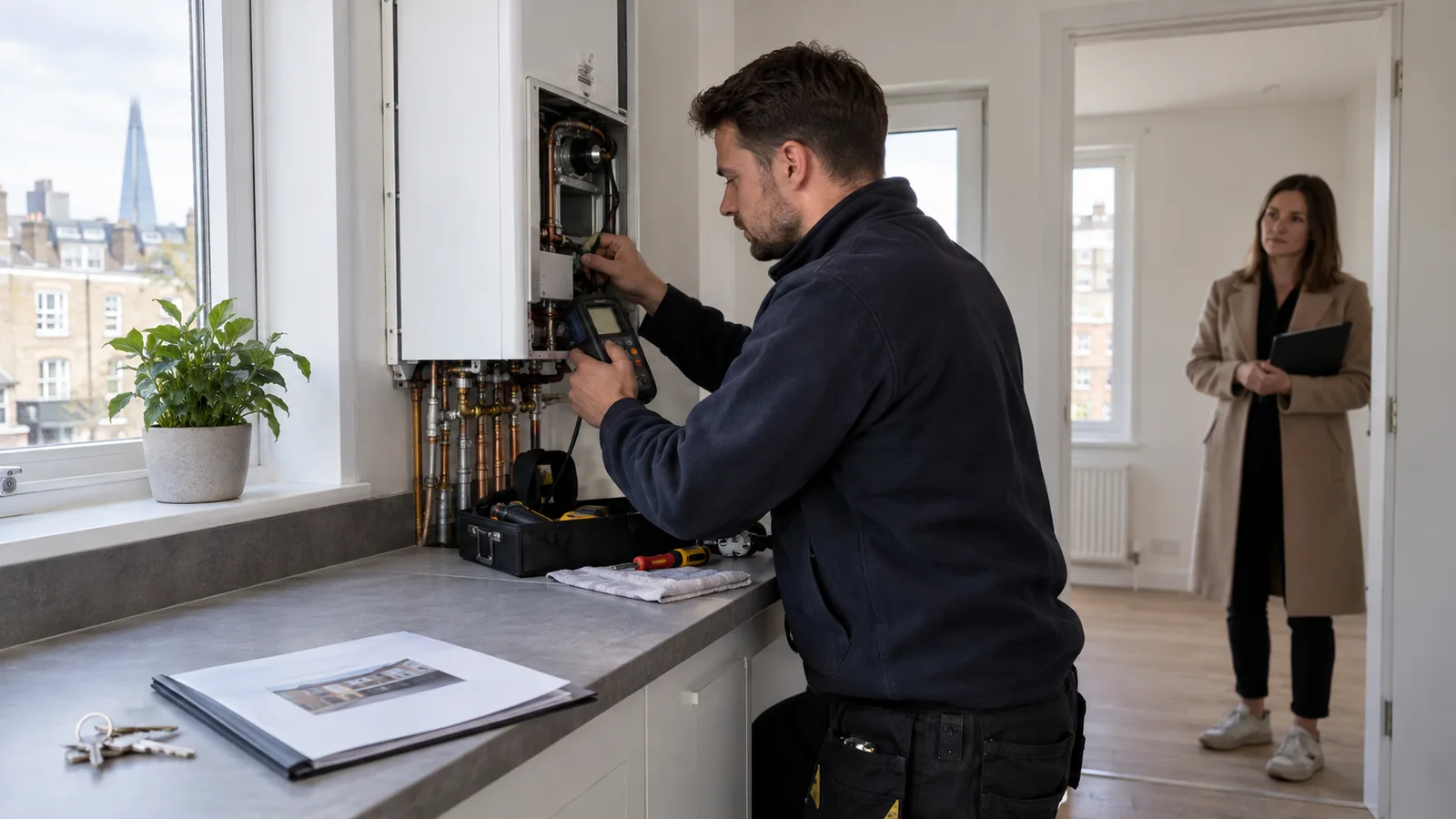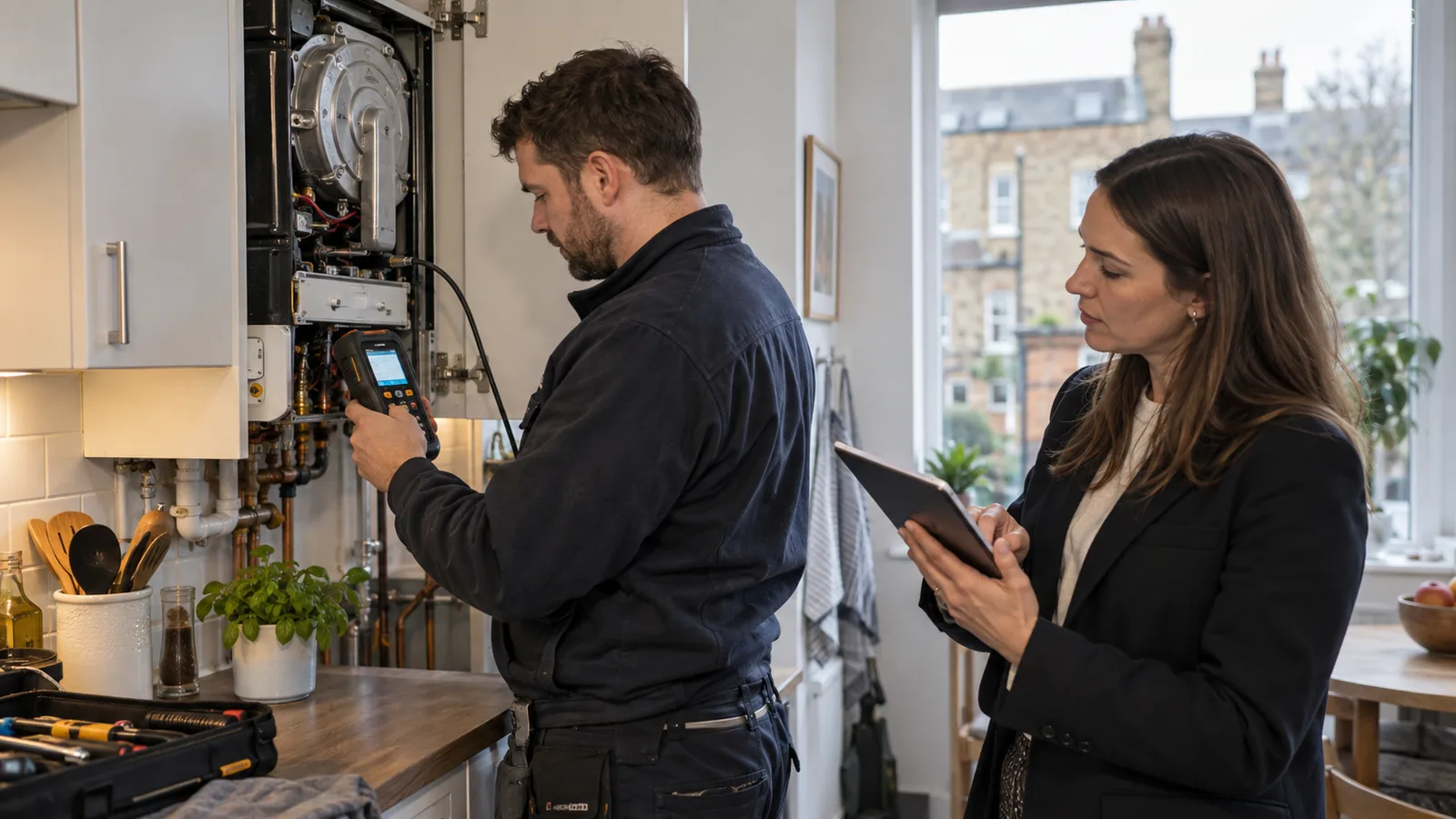
A tenant's own gas cooker changes the appliance duty, not the landlord's responsibility for the property's gas installation and pipework. This guide is written for practical decision-making and links to the sources used for verification.
Ownership changes the appliance duty
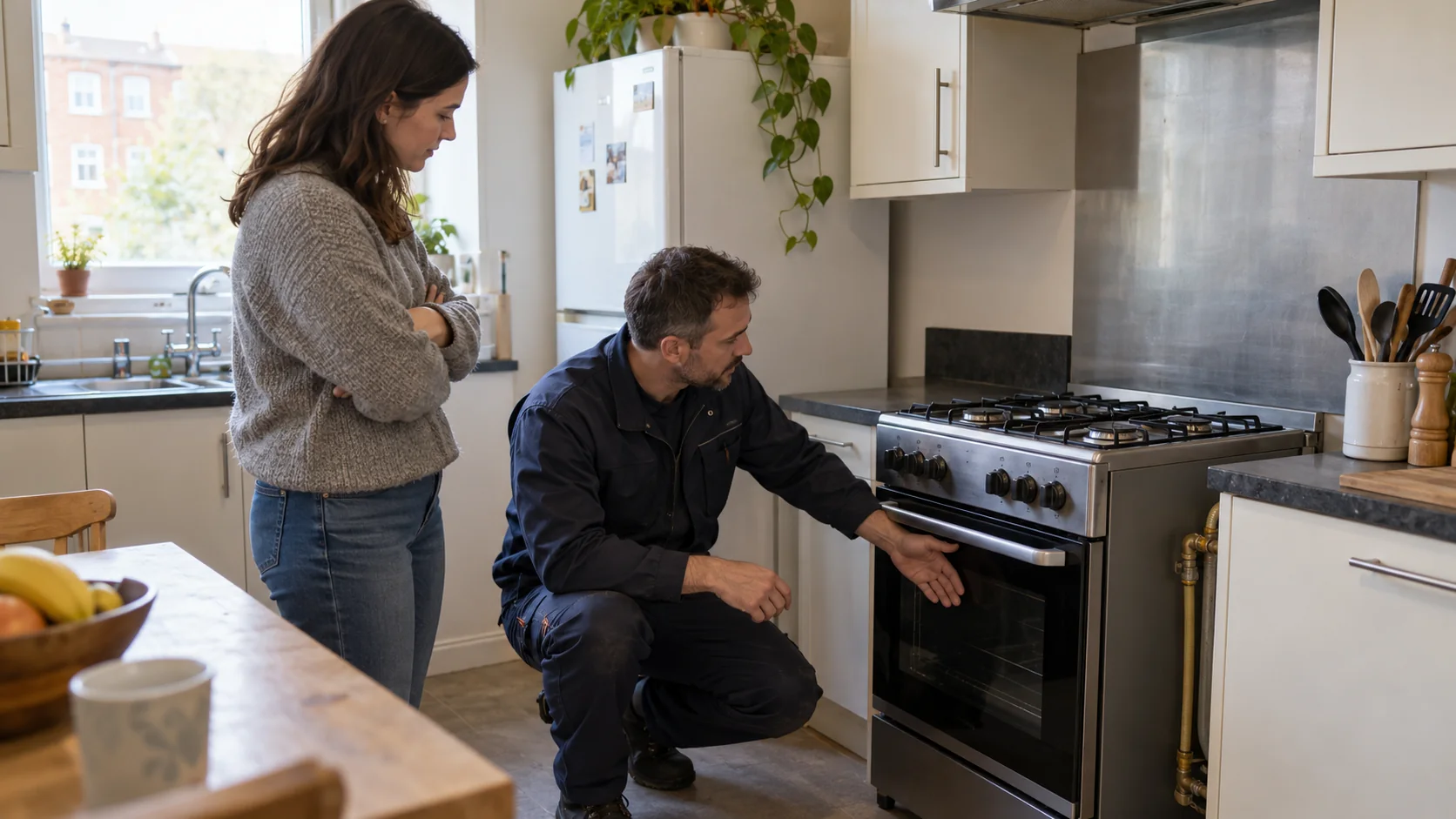
A tenant brings a freestanding gas cooker into a rented flat. The landlord already has an annual gas safety record for the boiler. Must the cooker be on that record? HSE distinguishes appliances the landlord owns and provides from appliances the tenant owns. The landlord's annual appliance-check duty covers their own supplied appliances and flues; the tenant is responsible for safety checks of their own cooker and any flue serving only it.
That distinction is about ownership, not whether the cooker sits in the same kitchen as the boiler. Do not describe a tenant-owned appliance as inspected if the engineer was only commissioned to check the landlord's equipment. If ownership is unclear, resolve it rather than relying on an old inventory.
The landlord still has a pipework responsibility
The landlord remains responsible for keeping the property's gas installation pipework safe. HSE says pipework is not itself covered by the annual appliance safety check, but recommends asking the Gas Safe registered engineer to test the whole gas system for soundness and visually examine accessible pipework when carrying out a visit. A tenant-owned cooker does not make a damaged connection or leaking installation pipe someone else's problem.
If a cooker is being fitted, removed or reconnected, agree how that work will be carried out safely. Gas installation and repair work should be handled by a Gas Safe registered engineer with the right competence for the appliance. Neither landlord nor tenant should treat a current boiler certificate as evidence that a newly connected cooker has been checked.
Keep the record honest and the arrangement clear
Tell the attending engineer which appliances the landlord owns, what the tenant owns and whether any work or additional checks are requested. The written record should show the work actually performed. If the tenant separately commissions a check of their cooker, keep that evidence distinct from the landlord's record. HSE also recommends considering flues connected to gas appliances even where they do not serve a landlord-provided appliance.
Make the practical arrangement clear at the start of the tenancy: who owns the cooker, who arranges its checks, and how a suspected gas fault will be reported. A clear inventory and sensible communication prevent a safety gap when people assume the other party is dealing with it.
- Identify landlord-provided and tenant-owned appliances
- Ask the engineer about installation-pipework soundness
- Keep appliance checks and landlord records accurately scoped
- Use a suitably registered engineer for gas work
Arrange the landlord's check
CertifyEPC can arrange a landlord gas safety visit in London. Mention any tenant-owned cooker when booking so the engineer knows what is present and can explain the scope of the landlord check and any additional work that should be agreed separately. The attending engineer determines the safety findings.
Research and verification
Authoritative sources
Use these primary and specialist sources to check the current rule and read further.
Requirements can change and unusual properties may need specialist advice. Check the latest official source and the facts of the property before relying on a compliance conclusion.