
Your EPC's modelled energy costs and your household bills answer different questions. Learn what the comparison can—and cannot—tell you. This guide is written for practical decision-making and links to the sources used for verification.
A useful comparison, not a forecast of your direct debit
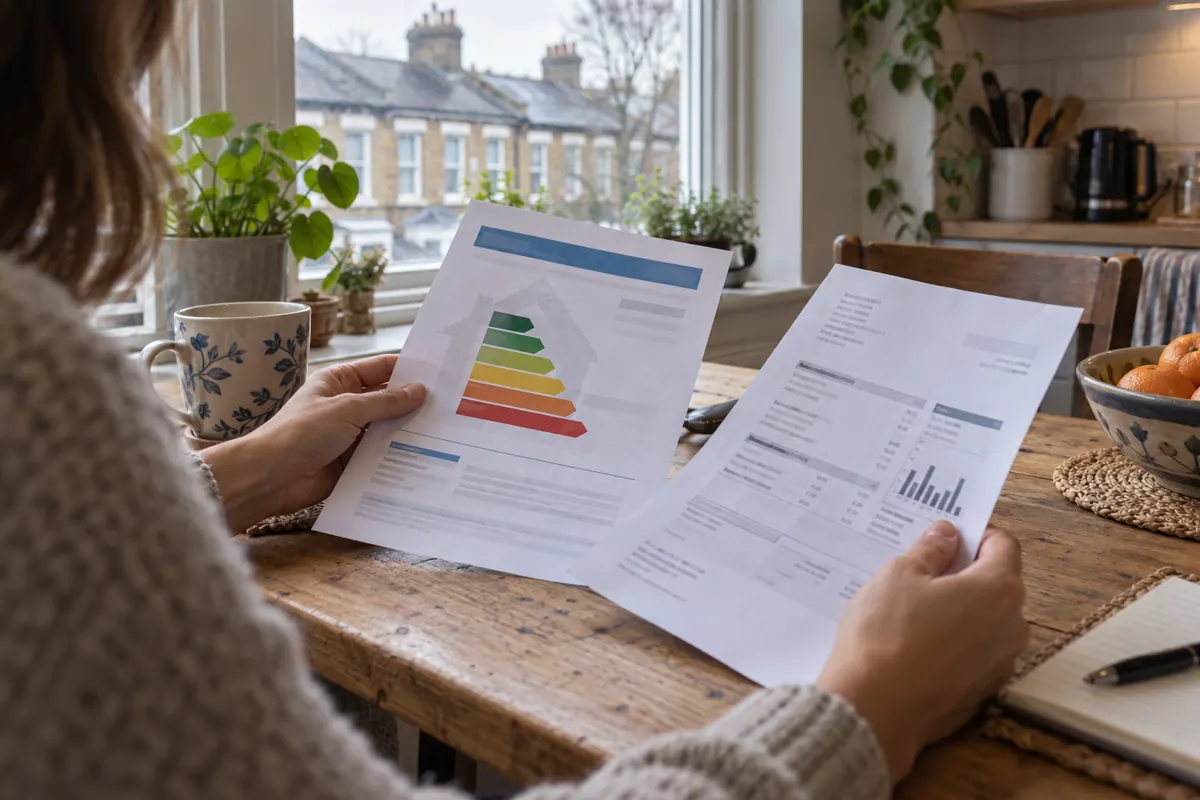
A London homeowner opens a new EPC and finds an estimated annual cost below last year's gas and electricity bills. The figures are not necessarily contradictory. An EPC applies standard assumptions so homes can be compared on a consistent basis. Your bills reflect your actual household, tariffs, weather and habits.
The EPC cost estimate covers regulated uses such as space heating, hot water and lighting. Plug-in appliances are outside it. The Office for National Statistics explicitly cautions that EPC estimates do not reflect a dwelling's actual energy use. Treat the figure as a modelled indicator, not a promise of what you will pay.
Why the gap can be large
Two identical flats can have different bills if one is occupied all day and the other is empty until evening. A warm thermostat setting, longer showers or more people at home can also change demand. Your electricity bill includes appliances and devices that the EPC estimate leaves out. Your tariff and standing charges add another difference, and an older certificate's quoted costs may reflect prices from its assessment date.
A mismatch is therefore not proof that the assessor made an error. It is still worth checking the certificate's address, floor area, recorded heating and insulation details. If a factual feature is wrong, contact the assessor or their accreditation scheme with evidence; do not try to reconcile the EPC by substituting your bills.
- Compare EPCs using the same standardised framework
- Use actual meter readings and tariff details to examine your spending
- Check property facts on the certificate before questioning its rating
Use both numbers for the right decision
When buying or letting, the EPC can help compare the building and identify possible improvements. For a household budget, ask for recent actual energy-use figures where available and apply the tariff you expect to use. Energy Saving Trust notes that recommendation costs and savings are indicative; major work needs property-specific advice and quotations.
Need a current certificate for a London home? Check the official register first. If the EPC is missing, expired or no longer represents substantial changes, CertifyEPC can arrange an accredited domestic assessment. The result will describe the property as assessed, not forecast your future bill.
Research and verification
Authoritative sources
Use these primary and specialist sources to check the current rule and read further.
Requirements can change and unusual properties may need specialist advice. Check the latest official source and the facts of the property before relying on a compliance conclusion.