Recognise possible carbon monoxide and gas-leak warning signs, take immediate safety action and understand the role of alarms and servicing. This guide is written for practical decision-making and links to the sources used for verification.
Treat a suspected gas escape as an emergency
If gas is suspected, avoid flames and electrical switches, open doors and windows where safe, turn off the gas supply if you know how and can do so safely, leave the property, and contact the National Gas Emergency Service on 0800 111 999 from a safe place.
Do not return until advised it is safe. Never search for a leak with a flame or attempt an unqualified repair.
Carbon monoxide cannot be seen or smelled
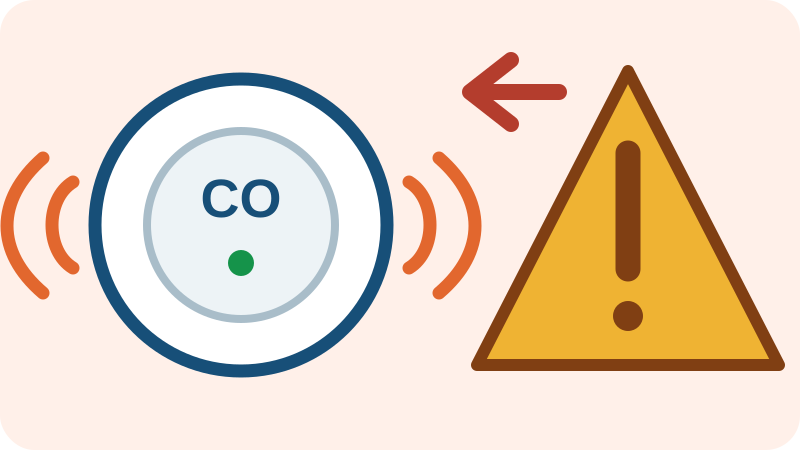
Possible symptoms include headache, dizziness, nausea, breathlessness, collapse or loss of consciousness. Symptoms may improve outside the property. Leave, seek medical help and report the suspected source.
A compliant carbon monoxide alarm is an important warning measure but does not replace appliance maintenance, correct ventilation, safe flues or a Gas Safe registered engineer.
- Yellow or unstable flames where a crisp blue flame is expected
- Sooting or staining around an appliance
- Pilot lights repeatedly going out
- Unusual condensation or combustion smells
- Occupants feeling unwell mainly inside the property
Preventive routines matter
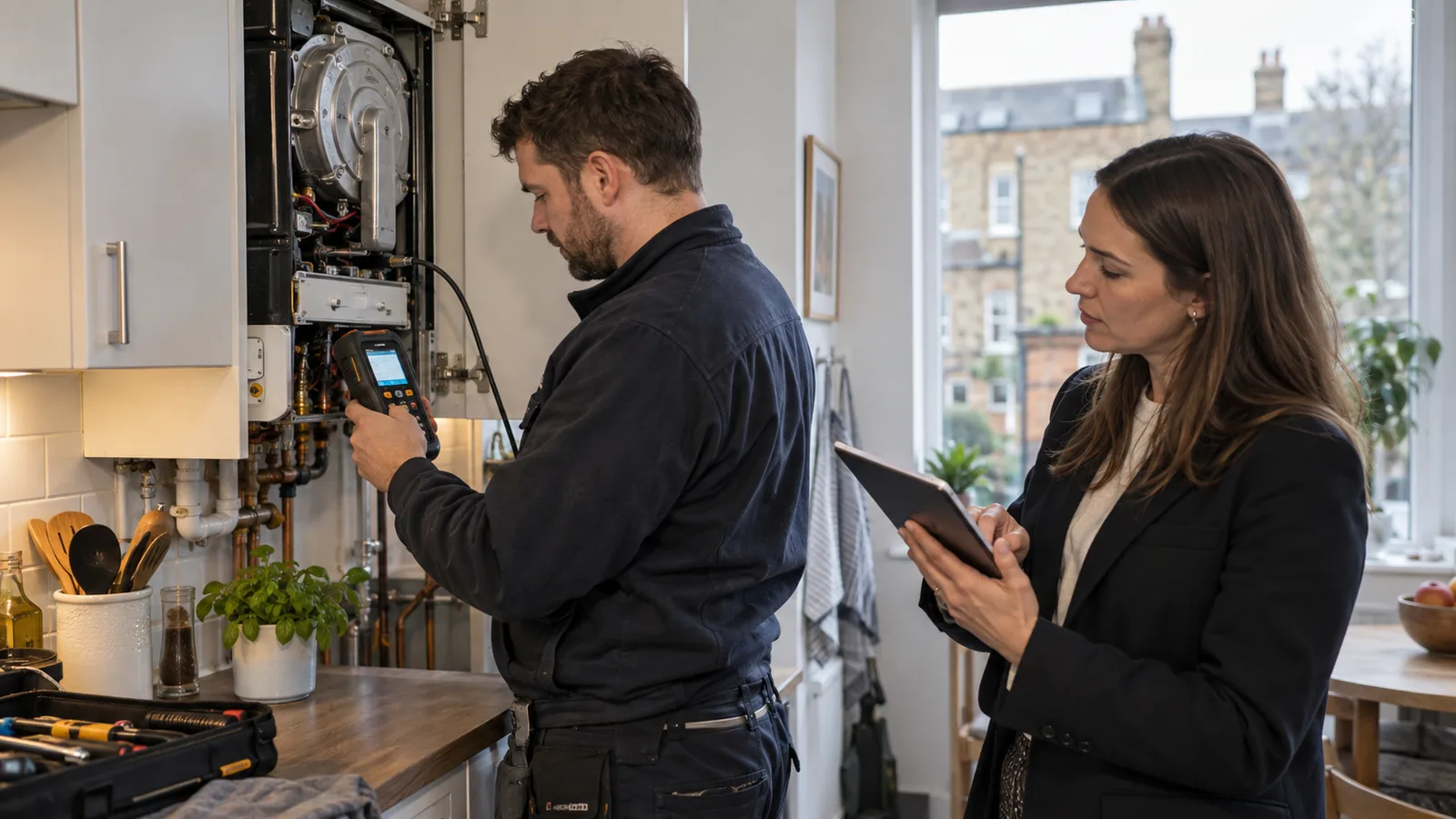
Arrange annual landlord gas safety checks where required, service appliances in line with manufacturer advice and never block ventilation. Test alarms according to their instructions and replace them at end of life.
Make emergency information visible to occupants and record all safety work. If an appliance has been isolated or labelled unsafe, do not reconnect or use it until a competent registered engineer confirms it is safe.
Research and verification
Authoritative sources
Use these primary and specialist sources to check the current rule and read further.
Requirements can change and unusual properties may need specialist advice. Check the latest official source and the facts of the property before relying on a compliance conclusion.