How landlords and agents can define an EICR across rooms, shared circuits, landlord supplies and communal areas without leaving safety gaps. This guide is written for practical decision-making and links to the sources used for verification.
An HMO instruction needs a mapped electrical scope
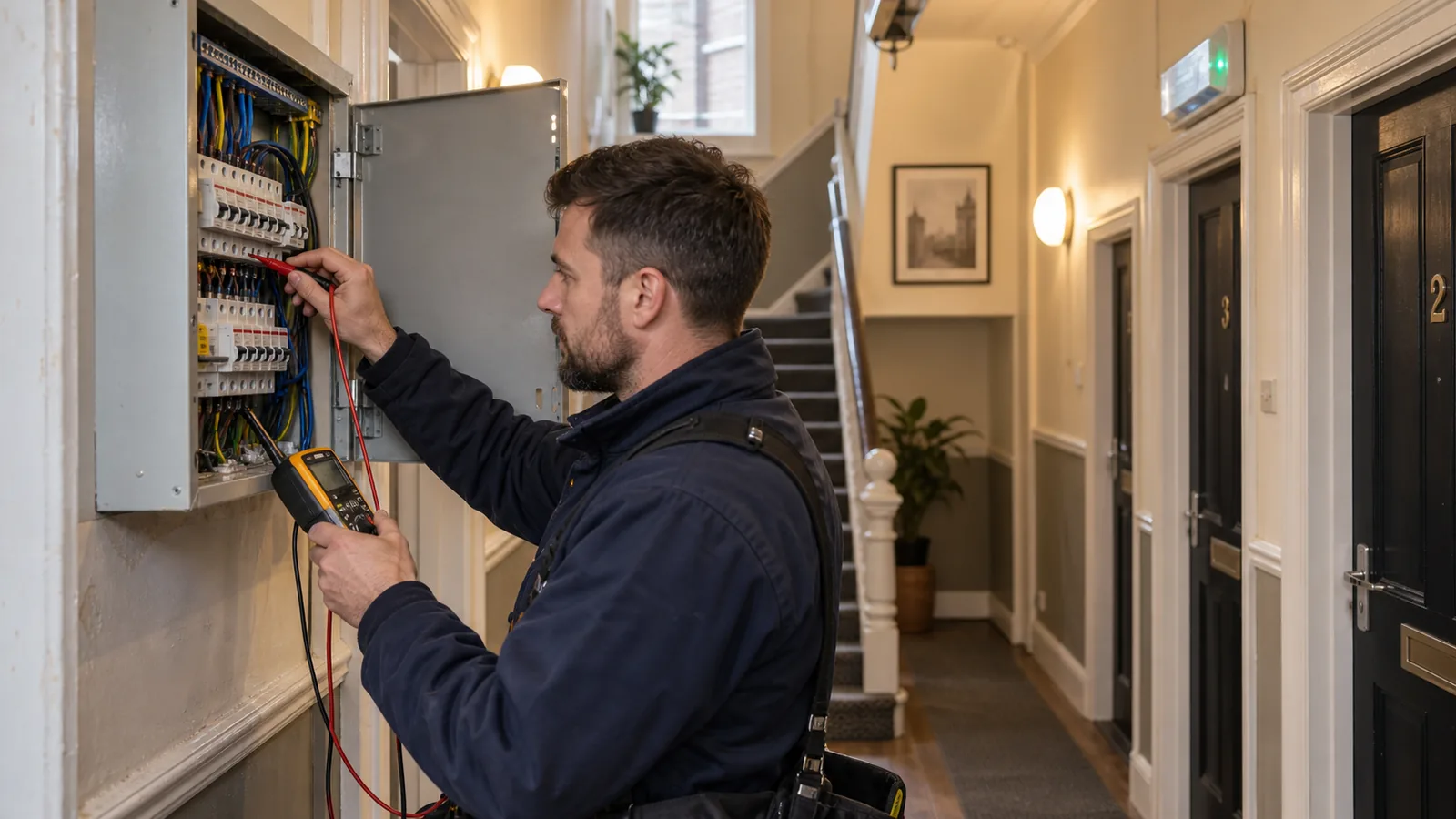
A house in multiple occupation can contain bedrooms under separate agreements, shared kitchens and bathrooms, common escape routes, landlord-supplied equipment and more than one consumer unit. Ordering 'an EICR for the property' without identifying those boundaries can create uncertainty over what the inspector was asked to cover. The client and qualified person should agree the extent of the fixed electrical installation before work starts and record any limitations clearly on the report.
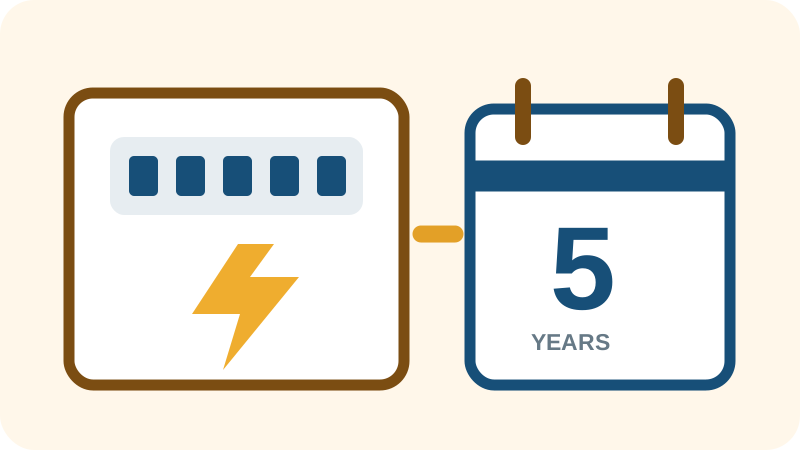
Current government guidance for rented homes in England requires the electrical installation in the premises to be inspected and tested by a qualified person at least every five years, or sooner where the previous report requires it. Electrical Safety First's current Best Practice Guide 10 expressly covers HMOs and can also assist landlords responsible for communal areas in blocks of flats. The property type changes the planning and access—not the need for competent inspection.
Distinguish fixed wiring from other safety systems
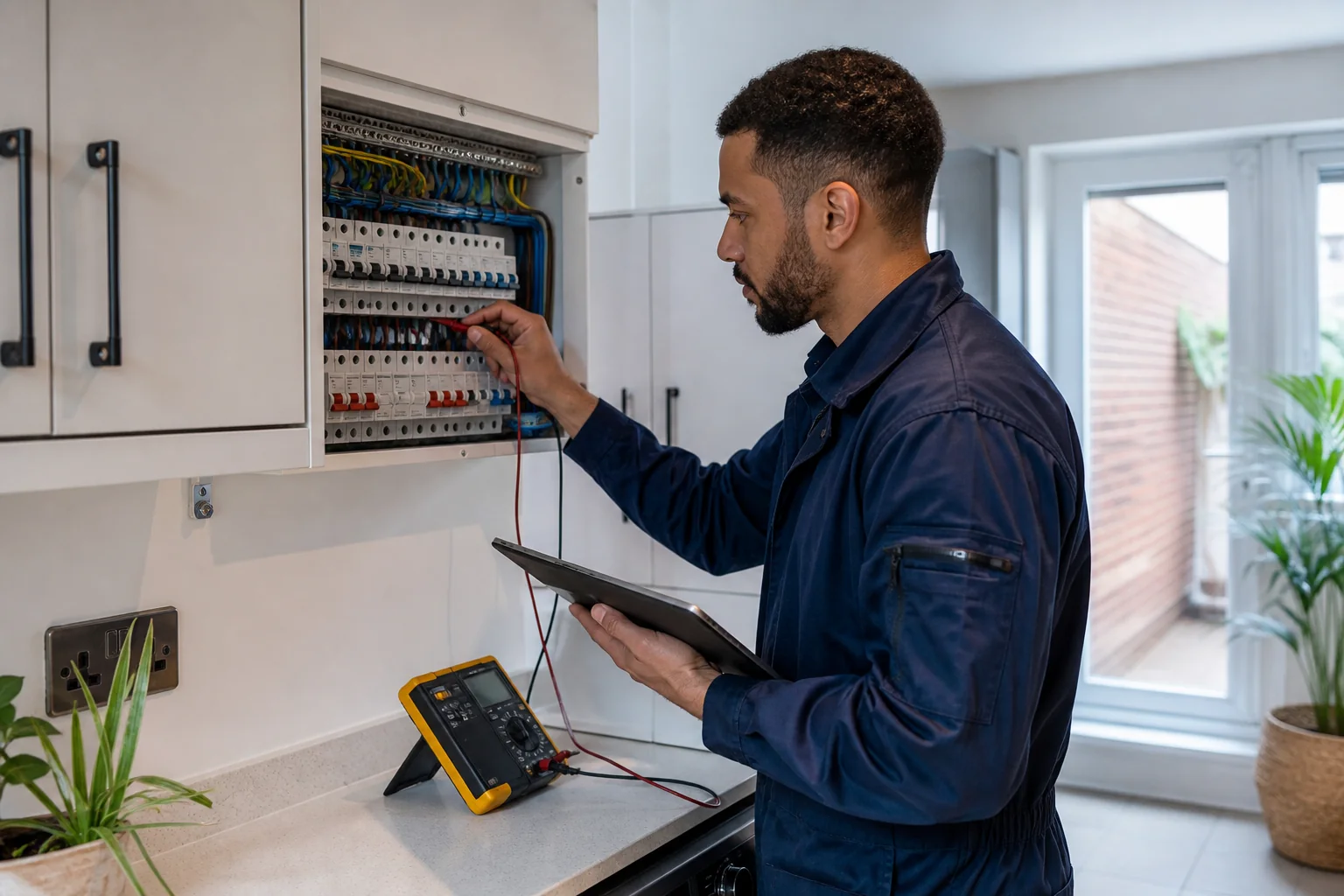
An EICR concerns the fixed electrical installation: wiring, socket-outlets, lighting points, consumer units, earthing and bonding, and circuits supplying permanently connected equipment. Best Practice Guide 10 includes circuits that supply safety services such as emergency lighting and fire alarms where present, but it distinguishes the condition of the fixed supply circuit from specialist inspection of the fire-alarm or emergency-lighting equipment itself.
Portable appliances and the functional testing of systems such as fire detection, carbon-monoxide detection, emergency lighting, solar equipment, battery storage and EV chargers can require separate inspection regimes and appropriately skilled people. Do not assume that one EICR has certified every electrical product or life-safety system in the building. Ask for separate records where the HMO licence, fire-risk assessment, tenancy or applicable standard requires them.
- Fixed wiring, socket and lighting circuits
- Consumer units, distribution equipment, earthing and bonding
- Landlord circuits serving corridors, stairs and shared rooms
- Fixed electric heating, water heating and extractors
- Separate specialist checks for equipment outside the agreed EICR scope
HMO licensing can add local requirements
GOV.UK explains that a large HMO in England or Wales normally requires a licence, and that smaller HMOs may also need one depending on the local authority scheme. Councils can add licence conditions and request safety evidence. In London, licensing boundaries and document expectations can therefore differ between boroughs and may change over time.
Check the licence and the council's current HMO standards rather than relying only on a previous owner's file. The five-year rented-sector electrical duty is a baseline, while a report can specify a shorter next-inspection interval. A material alteration, electrical incident, flood, fire or evidence of damage may also justify competent review before the calendar date.
What to give the inspector
Send the previous EICR and remedial certificates where available. Include a floor plan, consumer-unit schedule, tenancy layout, fire-alarm and emergency-lighting information, details of solar, battery or EV systems and any known faults or unauthorised alterations. Tell the provider if supplies cannot be isolated at normal times or if critical equipment needs a controlled shutdown.
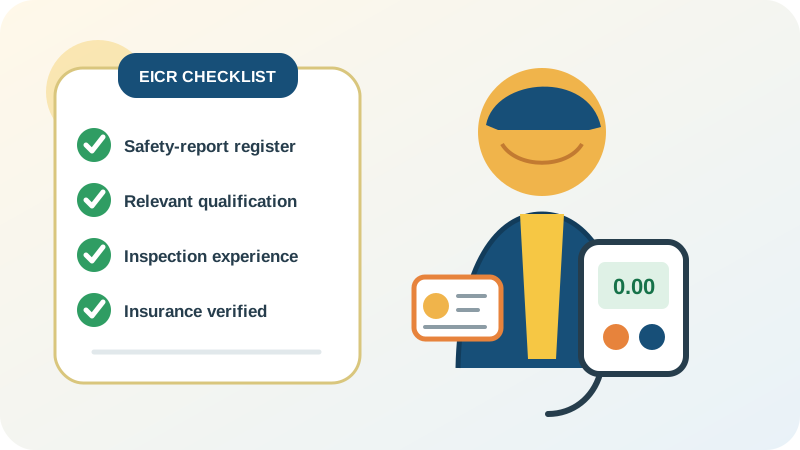
The inspector should be competent for the scale and complexity of the installation. Agree the property boundary, planned access, expected interruptions, report format and treatment of limitations in writing. A low fixed price that assumes one small consumer unit may not be comparable with a quotation that properly covers several landlord and tenant boards.
Close the loop after the report
Review the address, extent, limitations, schedules and next-inspection date—not only the overall satisfactory or unsatisfactory box. Current government guidance explains that C1, C2 and FI observations require action, while C3 is an improvement recommendation. Required remedial or investigative work for covered rented homes must be completed within 28 days or any shorter period stated in the report, with the prescribed evidence then supplied.
Keep the original EICR and appropriate remedial certification together, update the building's circuit and access schedule, and share the report with the people entitled to receive it. CertifyEPC can coordinate an HMO or landlord EICR in London when the scope and access information are supplied at booking.
Research and verification
Authoritative sources
Use these primary and specialist sources to check the current rule and read further.
Requirements can change and unusual properties may need specialist advice. Check the latest official source and the facts of the property before relying on a compliance conclusion.