
Electrical safety inspection duties for rented homes in England, including report timing, tenant copies, remedial work and record keeping. This guide is written for practical decision-making and links to the sources used for verification.
Inspection and testing at least every five years
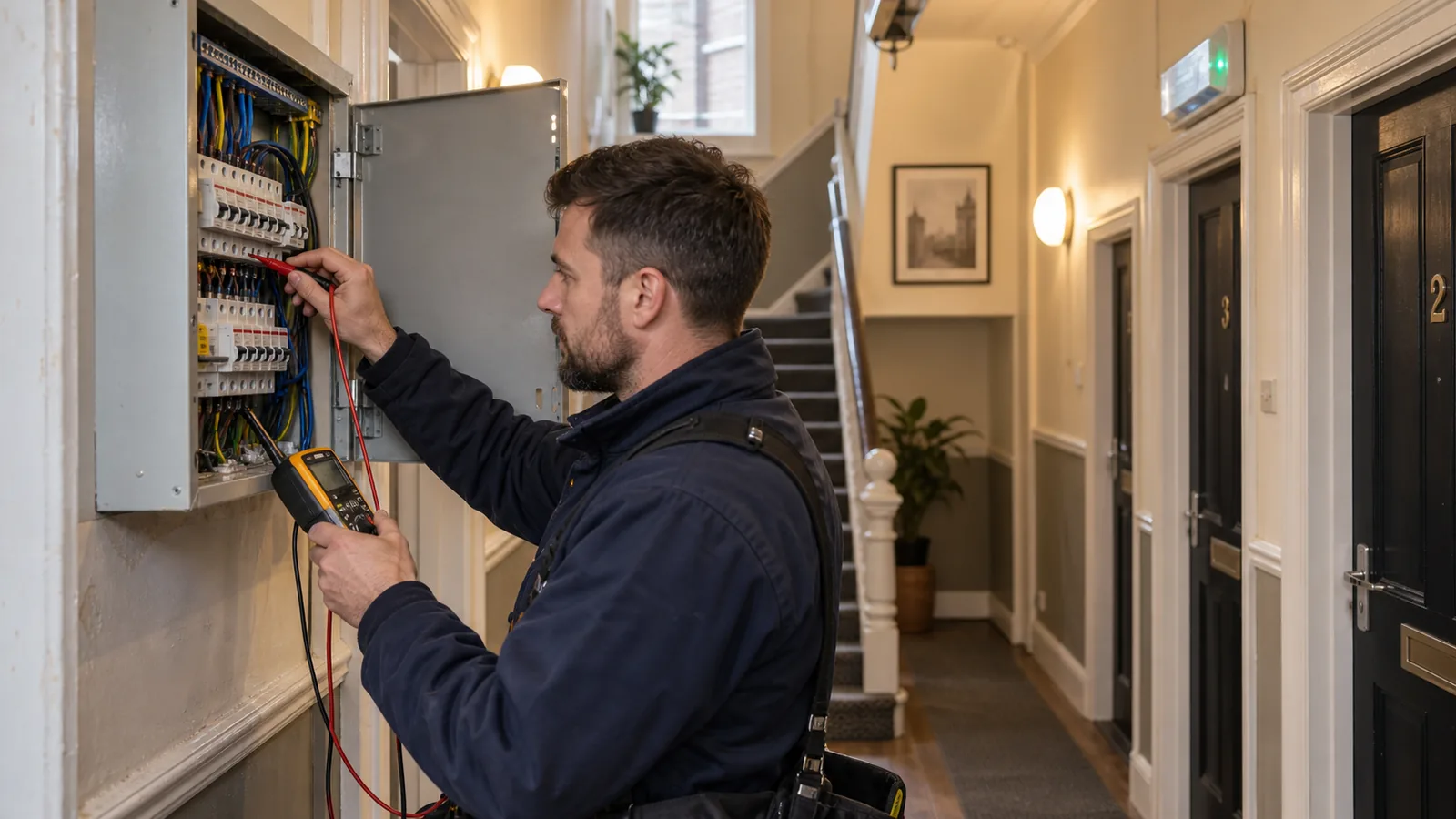
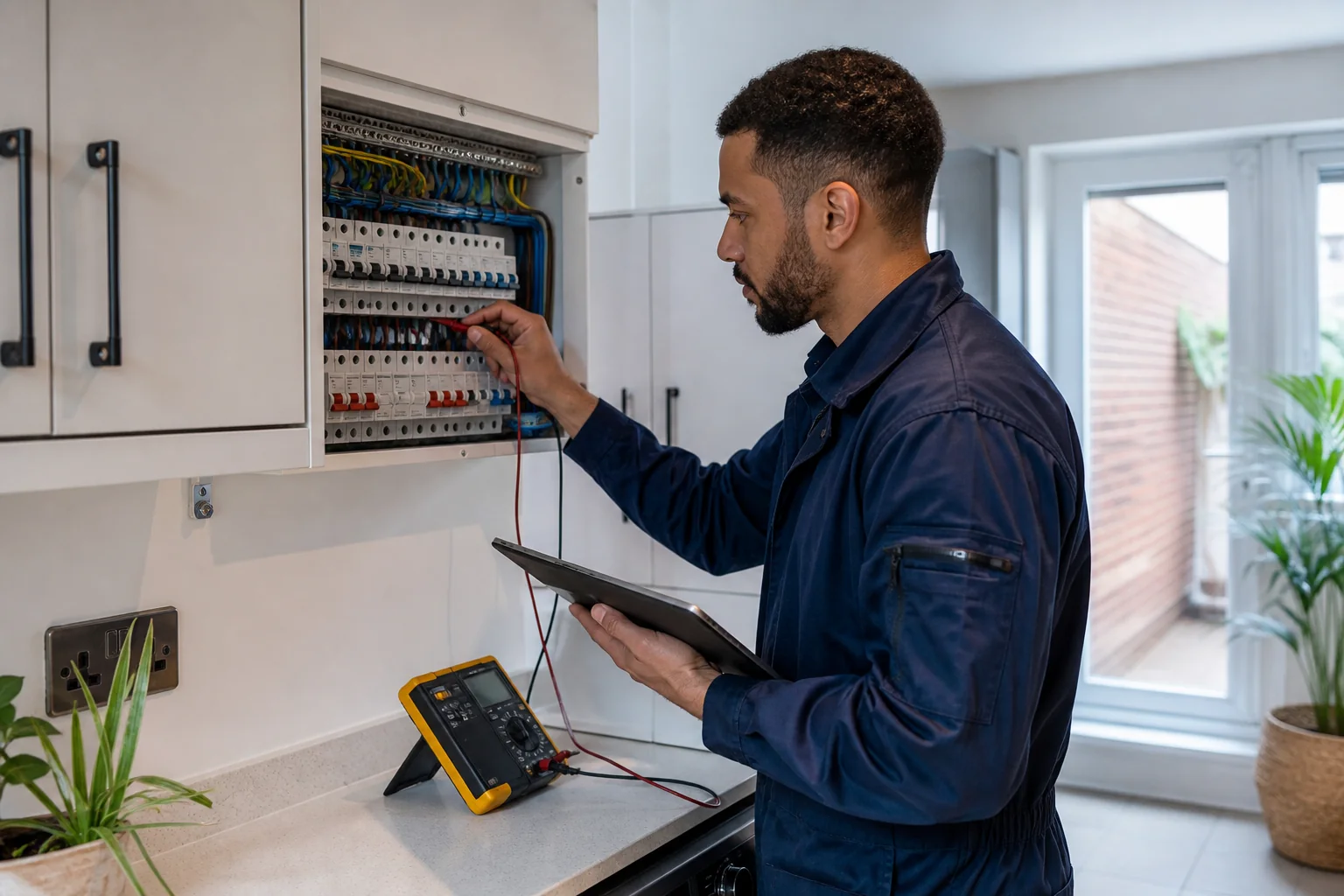
Landlords within scope in England must ensure the fixed electrical installation is inspected and tested by a qualified person at intervals of no more than five years, or sooner where the previous report requires. The standard is about the fixed installation, not portable appliances.
A new tenant must receive the current report before occupation. Existing tenants must generally receive it within 28 days of the inspection, and a prospective tenant within 28 days of a request. A local authority can require a copy within seven days.
What happens after an unsatisfactory result
C1, C2 and FI observations require remedial or further investigative work. The landlord must arrange the required action within 28 days or any shorter period stated in the report, then obtain written confirmation and supply the required documents to the tenant and local authority.
A C3 observation is an improvement recommendation and does not, by itself, make the report unsatisfactory.
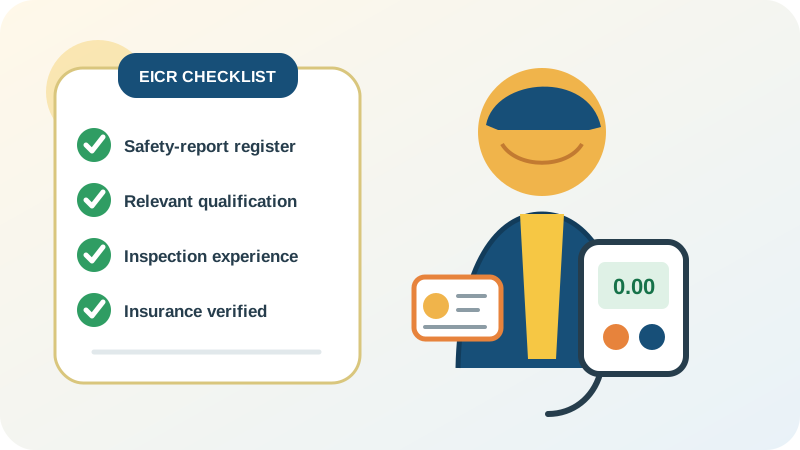
- Use a qualified and competent inspector
- Retain the report for the next inspection
- Give copies within the statutory timeframes
- Complete required work and keep written confirmation
- Record access attempts if a tenant does not cooperate
Scope and access should be agreed early
Tell the electrician about the number of consumer units, outbuildings, communal areas, known faults and sensitive equipment. Parts of the supply may need to be isolated for testing.
This summary concerns England. Electrical safety rules and housing regimes differ across the UK, and social housing requirements have their own commencement arrangements.
Research and verification
Authoritative sources
Use these primary and specialist sources to check the current rule and read further.
Requirements can change and unusual properties may need specialist advice. Check the latest official source and the facts of the property before relying on a compliance conclusion.