Floodwater can reach wiring and accessories out of sight. Here is how to make the property safe and commission the right electrical inspection. This guide is written for practical decision-making and links to the sources used for verification.
Dry-looking walls do not prove the electrics are safe
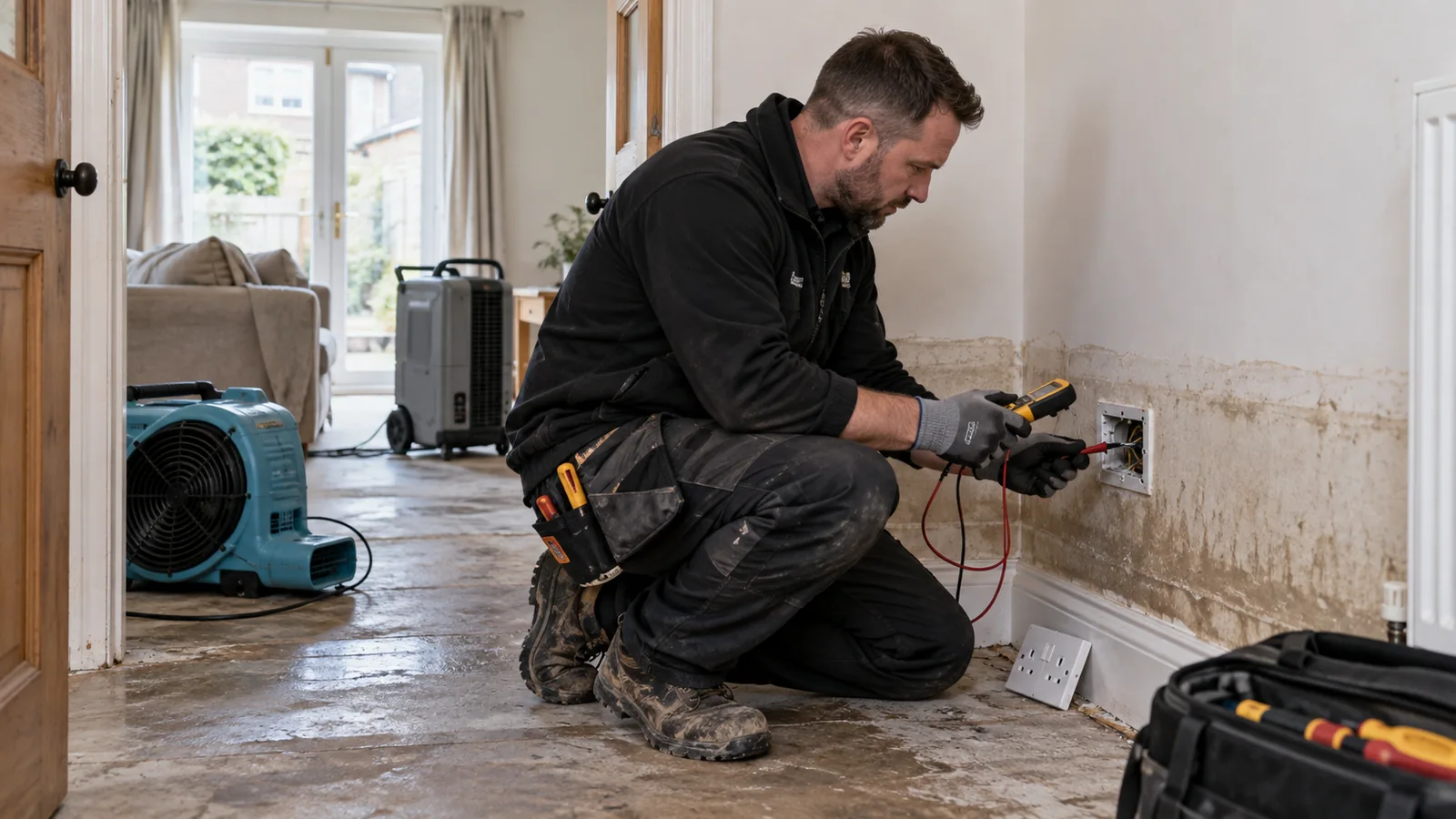
When floodwater or a burst pipe has reached sockets, wiring or a consumer unit, the first question is not whether the lights still work. Water and contamination can remain inside accessories and cable routes after the visible surface dries. A circuit that appears normal may still need testing, repair or replacement.
Electrical Safety First advises switching off at the consumer unit only if it is safe to do so, avoiding mains-powered equipment and seeking a registered electrician’s advice before supplies are restored. Never touch a wet consumer unit, exposed wiring or standing water near electrical equipment. If you are a tenant, notify your landlord; also speak to your insurer before approving repairs.
What to ask the electrician for
Explain how high the water reached, whether it was clean water or flood/sewage water, which rooms and circuits were affected, and whether anyone has re-energised them. Ask the electrician to assess the damage and whether an Electrical Installation Condition Report is appropriate. Electrical Safety First specifically recommends an EICR after flood damage to document the installation’s condition and the equipment requiring repair.
The inspection is not itself a repair. The electrician may need to isolate circuits, test insulation resistance and examine or replace damaged accessories. Appliances affected by water need their own professional checks; an EICR of fixed wiring does not certify a soaked washing machine or extension lead.
Clean water and contaminated water are different jobs
A short-lived leak of clean water may permit some components to be dried and tested, with damaged sockets or switches replaced. Extensive flooding or contaminated water can mean much more invasive work, including rewiring. Electrical Safety First’s technical guidance also warns that submerged electronic accessories such as RCD socket-outlets must be replaced, not simply dried and reused.
Do not decide the scope from a photograph alone. Give the electrician access to the consumer unit, affected rooms and any available earlier electrical reports. Keep photos, test results, repair records and the insurer’s authorisation together. If work is completed, ask which document records the repairs and which circuits have been confirmed safe to use.
- Keep affected circuits off until a competent electrician advises otherwise
- Record the water source, depth, affected rooms and appliance list
- Request a written inspection outcome and separate repair scope
- Have flood-affected appliances assessed separately
Arranging an inspection
CertifyEPC can help arrange an EICR for a property after water damage. Tell us at the outset that flooding has occurred: this affects the inspection scope and may require urgent electrical attendance before a routine reporting appointment. If anyone is at immediate risk, keep clear of the installation and use the appropriate emergency service.
Research and verification
Authoritative sources
Use these primary and specialist sources to check the current rule and read further.
Requirements can change and unusual properties may need specialist advice. Check the latest official source and the facts of the property before relying on a compliance conclusion.