Learn when a flat needs its own EPC, who must arrange it, what the assessor records and how mixed-use blocks and communal systems affect the job. This guide is written for practical decision-making and links to the sources used for verification.
A self-contained flat will normally need its own EPC
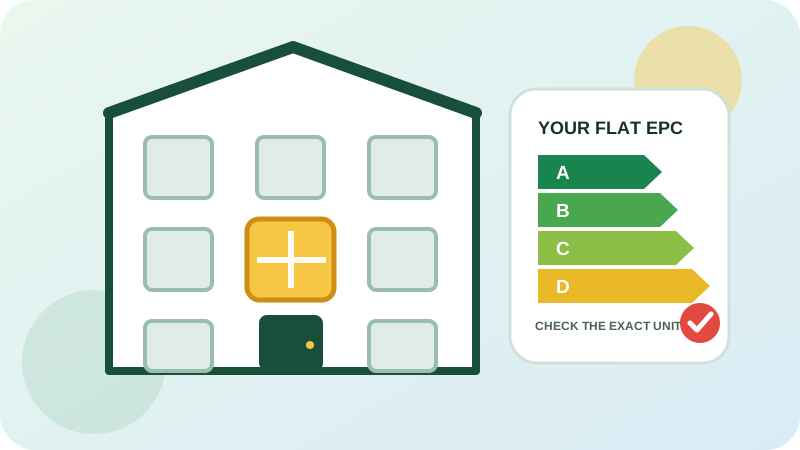
Energy Performance Certificate duties apply to a building and can also apply to a building unit designed or altered for separate use. Government guidance gives a self-contained flat as an example of such a unit. In practical terms, the EPC should normally describe the accommodation being sold or let rather than relying automatically on a certificate for the entire block.
A separate front door is useful evidence, but the assessment is not decided by one feature alone. Independent occupation, the layout of the accommodation and control of heating or ventilation can all help establish the correct building unit. Shared heating does not necessarily prevent a flat from being treated separately where the occupier can control the service.
- Purpose-built flats and apartments
- Self-contained maisonettes
- A house converted into separately occupied flats
- Residential accommodation above commercial premises where it is a separate dwelling
A room letting is different from a separate dwelling
Government domestic EPC guidance says that an individual room is not itself a building or building unit designed or altered for separate use. Where rooms are let within a shared house and the occupants share essential facilities, the relevant EPC may be for the dwelling as a whole rather than one certificate per bedroom.
Converted buildings can be less straightforward. A studio with its own cooking, washing and living facilities may be a separate dwelling even though the postal address or council records are unclear. Before marketing, confirm exactly what is being sold or let and give the assessor the full address, floor, unit number and access arrangement.
- Do not order an EPC using only the main building address
- Identify whether the accommodation is self-contained
- Explain any shared kitchen, bathroom, heating or entrance
- Clarify recent conversions or changes in the number of units
Who arranges the EPC and when?
For an existing flat being sold, the seller is responsible for making a valid EPC available. For a new letting, that responsibility normally sits with the landlord, although an estate or letting agent acting for them must be satisfied that an EPC has been commissioned before marketing. The successful buyer or tenant must receive the valid certificate free of charge.
An EPC is generally valid for 10 years unless a newer one has been produced for the same dwelling. Search the official register before ordering. Check the individual flat address, assessment date and property description—not just the block name—because the register may contain records for several flats, commercial units and common parts at the same location.
- Search the official register using the complete flat address
- Use the newest valid certificate for that specific dwelling
- Commission a replacement before marketing if no valid EPC exists
- Keep the report reference number with sale or tenancy records
What the assessor needs to record in a flat
The domestic energy assessor records the features that affect the dwelling's modelled energy performance. For a flat, position within the block matters: a top-floor unit, ground-floor unit and mid-floor unit can have different heat-loss boundaries even when their internal layouts look similar. External walls, roof or floor exposure, glazing, doors, lighting, heating, hot water and visible or evidenced insulation all contribute to the assessment.
Communal or district heating needs accurate information. Make controls accessible and provide any reliable details available from the freeholder, managing agent or heat supplier. If insulation, glazing or heating has been upgraded, gather installation certificates, guarantees, invoices or other acceptable evidence. The assessor must follow the approved methodology and cannot simply accept an unsupported verbal description of hidden work.
- Access to every room, meter position and heating controls
- Boiler, heat-interface unit or communal-heating information
- Evidence for replacement windows and insulation
- Details of extensions, roof rooms or internal level changes
- Parking, concierge or key-collection instructions
Mixed-use blocks and communal areas need the right assessment route
A block may contain dwellings, a shop or office, and conditioned communal space. Government non-domestic guidance explains that each separate dwelling requires a domestic EPC, while separately used commercial units may require non-domestic EPCs. Conditioned common parts can need different treatment when a whole building or relevant non-domestic area is sold or let.
This is especially important in London conversions, buildings above shops and developments with several entrances or heating systems. One certificate methodology should not be stretched across every part of a mixed-use property. Give the assessor plans or a clear description of the transaction so the correct domestic or non-domestic assessment can be confirmed.
Leasehold improvements need evidence and permission
An EPC may recommend insulation, glazing, heating controls or renewable technology, but it is not permission to alter a leasehold building. The lease, freeholder consent, planning controls, building regulations and the effect on ventilation or fire safety may all need consideration before work starts.
Keep evidence of authorised improvements for the next assessment. An existing EPC does not update itself when work is completed; if a fresh rating is needed to reflect substantial changes, a new assessment and lodgement will be required. CertifyEPC can arrange the correct domestic assessment for a London flat or maisonette and keep the certificate available through the customer dashboard.
Research and verification
Authoritative sources
Use these primary and specialist sources to check the current rule and read further.
Requirements can change and unusual properties may need specialist advice. Check the latest official source and the facts of the property before relying on a compliance conclusion.