
A practical checklist for landlords, agents and tenants covering access, appliance details, previous records and what happens after the visit. This guide is written for practical decision-making and links to the sources used for verification.
Confirm scope and access
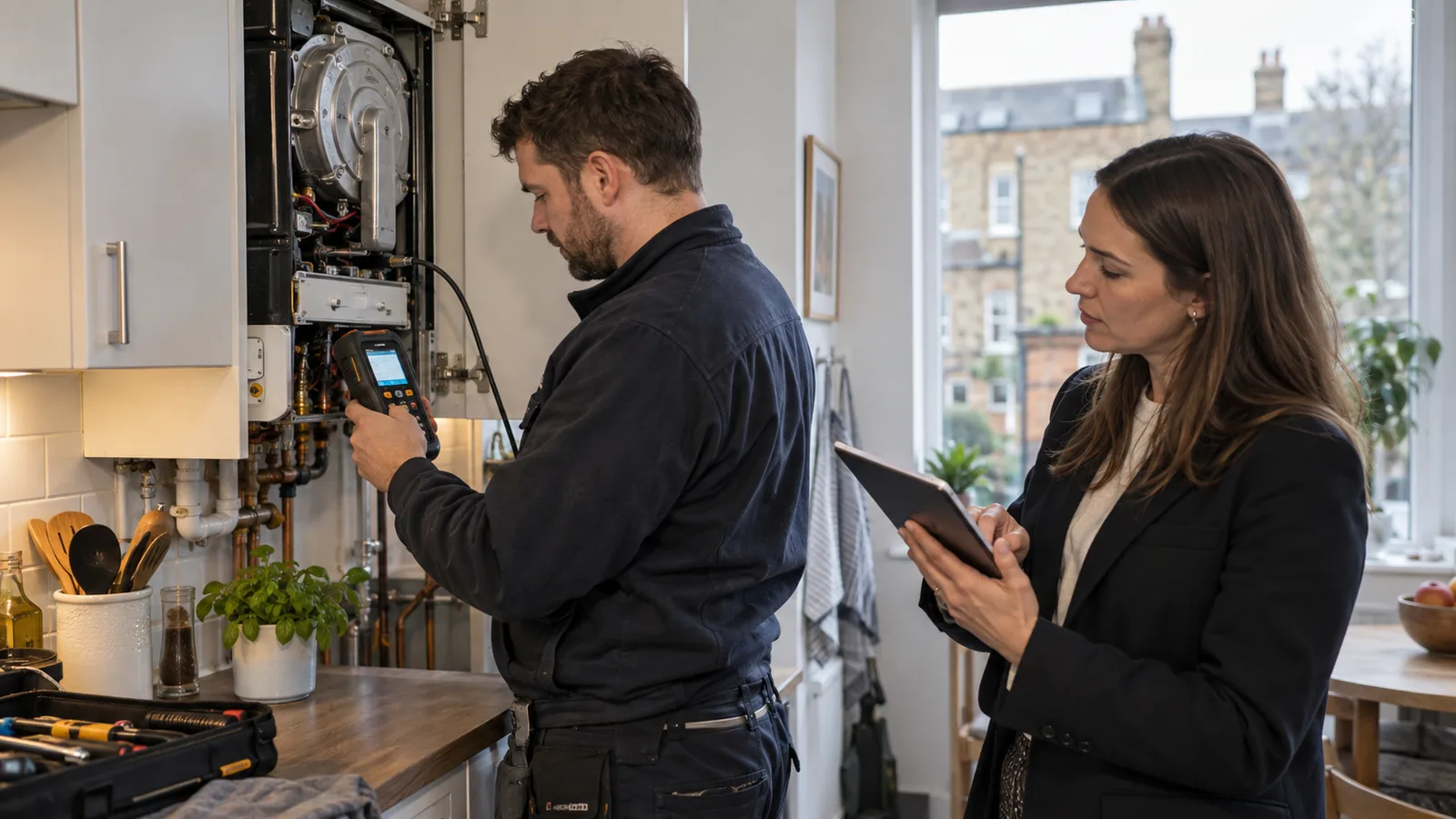
List every landlord-provided gas appliance, its location and any relevant flue route. Tell the engineer about locked rooms, roof or cupboard access, parking, concierge procedures and known faults.
The engineer must be Gas Safe registered for the relevant appliance categories. Check the card if needed and provide the existing record and recent repair information.
- Boiler and hot-water appliances
- Gas fires and heaters
- Cookers or hobs supplied by the landlord
- Accessible flues and ventilation openings
- Gas meter and emergency control
Prepare the tenant professionally
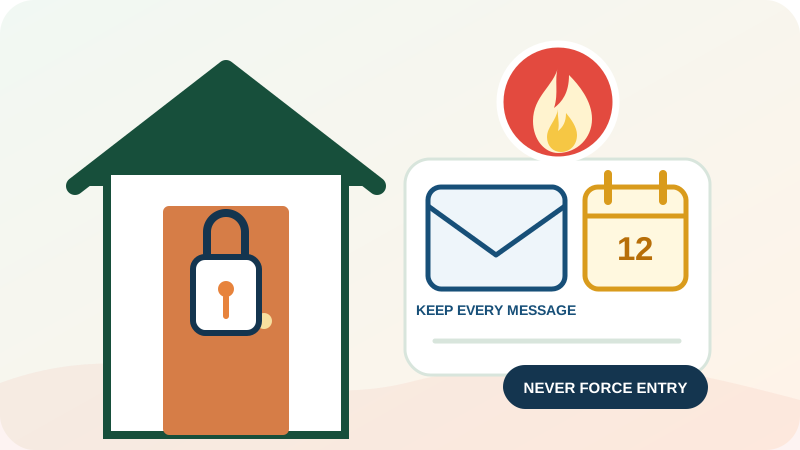
Agree a lawful appointment, give the required notice and explain that appliances may need to be operated. Keep a dated record of invitations, reminders and access attempts.
Do not ask an engineer to certify an appliance they could not access. If a tenant repeatedly refuses access, follow HSE guidance and obtain housing or legal advice.
Close the loop after the inspection
Read the record, arrange any required repair, supply the tenant copy and update the next due date. If the engineer has classified an appliance as unsafe, follow the warning and do not use it.
Store the record with service documents, invoices and access evidence. Clear records make portfolio renewals and future visits easier.
Research and verification
Authoritative sources
Use these primary and specialist sources to check the current rule and read further.
Requirements can change and unusual properties may need specialist advice. Check the latest official source and the facts of the property before relying on a compliance conclusion.