A practical guide to the recommended ten-year interval, earlier warning signs and what an electrical condition report can reveal in an owner-occupied home. This guide is written for practical decision-making and links to the sources used for verification.
The ten-year recommendation is a maximum guide—not a promise
There is not normally a routine statutory requirement for the owner of an owner-occupied home in England to commission an EICR. However, Electrical Safety First and NICEIC recommend periodic inspection and testing at least every 10 years for an owner-occupied home. The purpose is to identify deterioration, damage and conditions that could create electric-shock or fire risks in wiring that is often hidden from view.
The report from the previous inspection may recommend an earlier next-inspection date, and that property-specific recommendation should take priority over a generic interval. Age alone does not prove that wiring is unsafe, but an unknown inspection history is a reason to assess the installation rather than assume it is sound.
- Check for a dated inspection label near the consumer unit
- Look for the previous EICR and its next-inspection recommendation
- Do not confuse an EICR with a certificate for one recent alteration
- Record major electrical work completed since the last inspection
Situations where an earlier inspection is sensible
Electrical Safety First recommends periodic inspection when buying or selling a previously occupied property as well as at the normal interval. A pre-purchase EICR can be particularly valuable where the installation history is missing, the consumer unit or wiring appears dated, or a survey raises electrical concerns. It complements rather than replaces the general property survey.
Do not wait for the calendar if there are warning signs. Repeated circuit-breaker trips, burning smells, scorch marks, buzzing or crackling, damaged accessories, electric shocks or unexplained overheating need prompt attention from a competent electrician. Inspection may also be appropriate after flooding, fire damage, unauthorised alterations or a long period of vacancy.
- Before buying a previously occupied home
- When the last inspection date cannot be established
- After flood, fire or significant building work
- Following repeated trips, overheating or visible damage
- Before major renovation where the existing electrical capacity matters
What the inspection covers
An EICR assesses the fixed electrical installation: consumer units, protective devices, earthing and bonding, fixed wiring, socket-outlets, switches, lighting points and fixed equipment within the agreed scope. Portable plug-in appliances are normally outside the EICR and may require a different inspection arrangement.
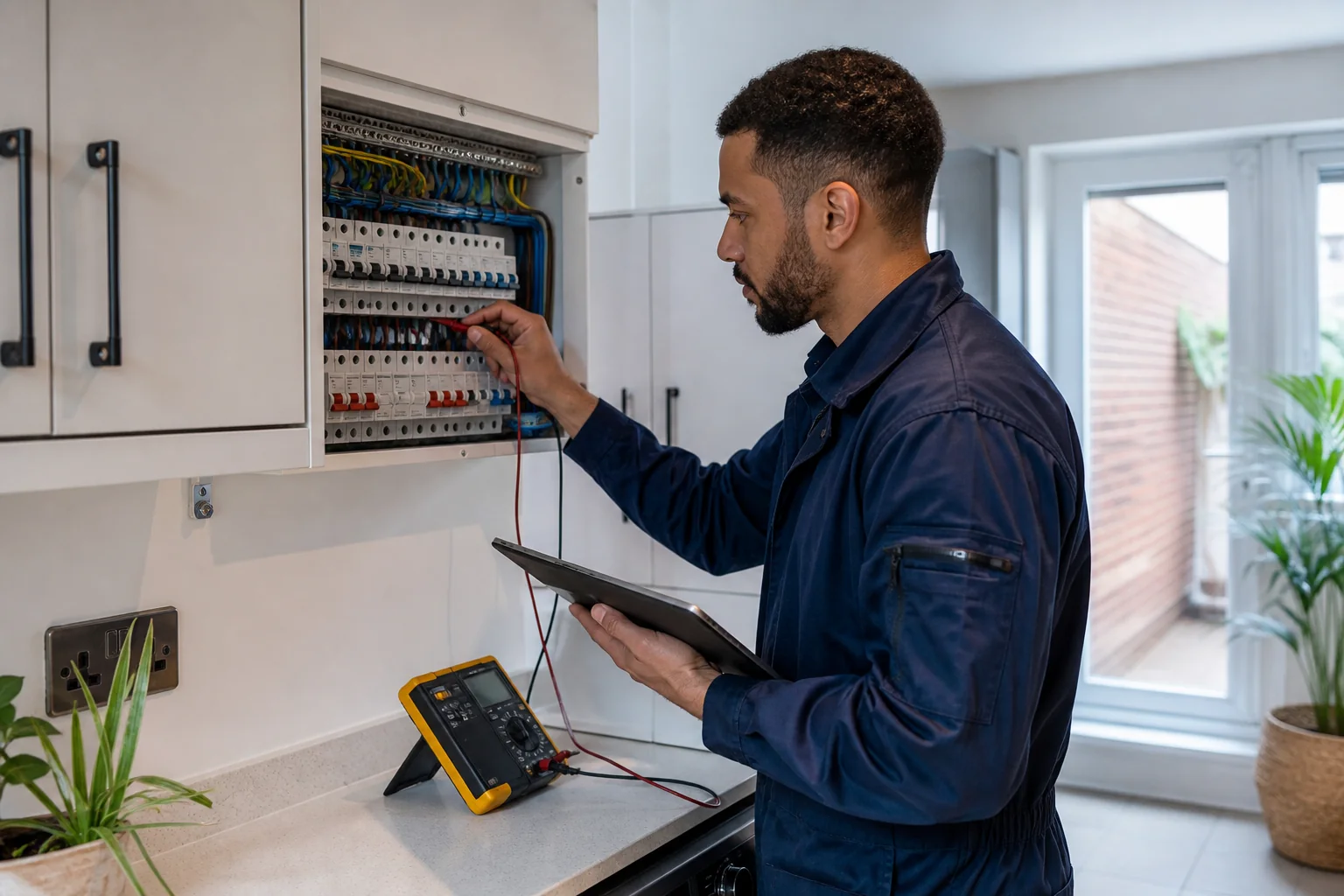
The electrician combines visual inspection with electrical testing and may need to isolate circuits or the supply for parts of the visit. Agree access to the consumer unit, rooms, outbuildings and relevant fixed equipment in advance. Sensitive computers, alarms, medical equipment or home-working systems should be discussed before isolation.
Read the outcome and act proportionately
The report records whether the installation is satisfactory or unsatisfactory and lists observations. C1 indicates danger present, C2 indicates a potentially dangerous condition, FI calls for further investigation without delay, and C3 recommends improvement. C1, C2 or FI observations normally lead to an unsatisfactory overall outcome.
An EICR is not a quotation for repairs. Ask for the observations to be explained, obtain a clear remedial scope and keep the report with electrical certificates and invoices. CertifyEPC can arrange an EICR with a suitably qualified person and provide the completed digital report through the customer case record.
Research and verification
Authoritative sources
Use these primary and specialist sources to check the current rule and read further.
Requirements can change and unusual properties may need specialist advice. Check the latest official source and the facts of the property before relying on a compliance conclusion.